
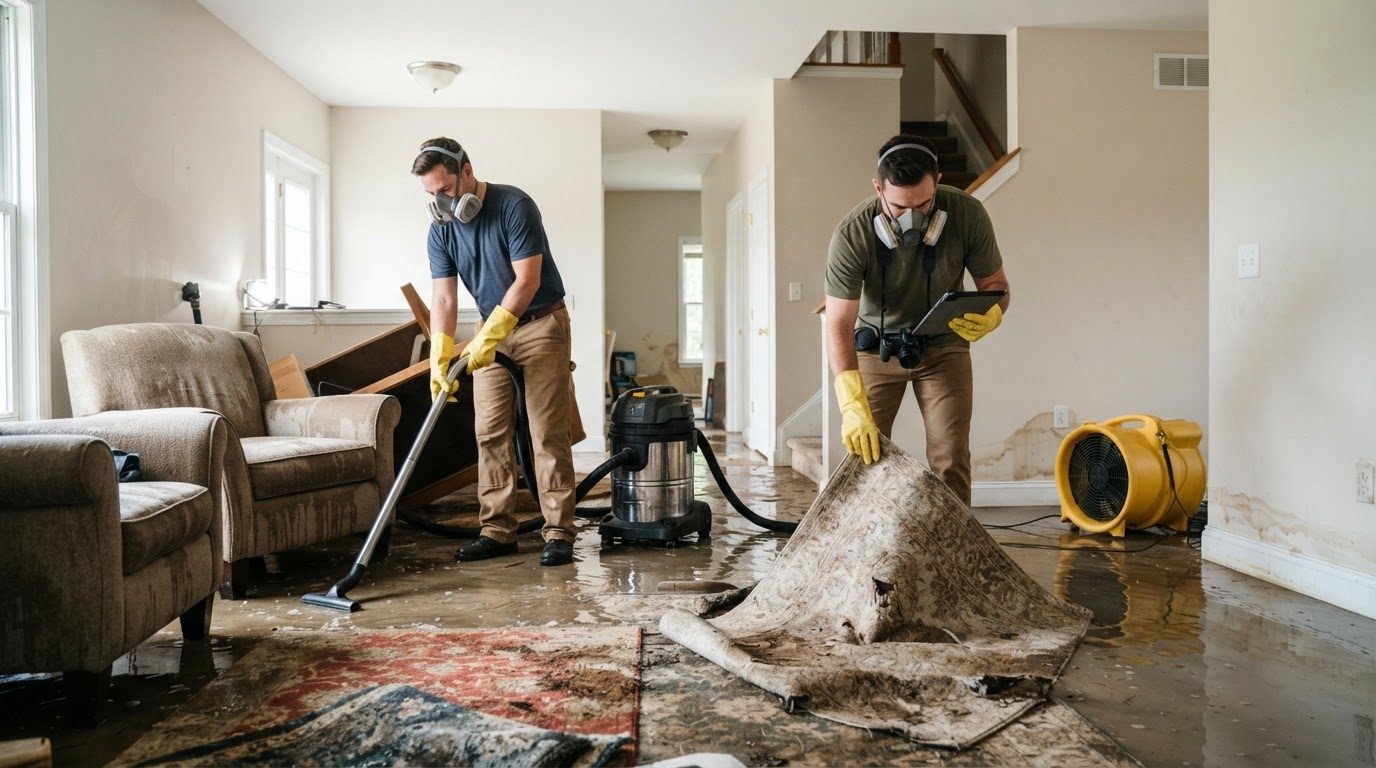
A burst supply line, failed water heater, or flooded basement can turn a minor leak into a building emergency within minutes. The priority is not salvaging belongings first; it is protecting people, stopping the source when safe, and preventing water from spreading into structural materials.
A Water Damage Emergency generally means uncontrolled water is threatening safety, contents, building materials, or business operations. Even a clean-water leak may require immediate mitigation if it reaches flooring, drywall, electrical systems, insulation, or concealed cavities.
The first response should be practical and documented. Restoration Logistics can help coordinate assessment and mitigation, but occupants should never enter a hazardous area or operate electrical equipment in standing water simply to accelerate cleanup.
Make the Property Safe Before Cleanup Begins
Evacuate the affected area when water is rising, ceilings are sagging, floors feel unstable, strong sewage odors are present, or electrical systems may be compromised. Keep children, pets, and anyone with respiratory or mobility limitations away from the site.
Call 911 for an immediate life-safety threat, such as electrocution, fire, trapped occupants, structural collapse, gas odor, or a medical emergency. A restoration contractor handles property damage; emergency services handle threats to life and public safety.
Electrical precautions are essential:
- Do not walk through standing water near outlets, appliances, extension cords, furnaces, or electrical panels.
- Do not touch breakers from a wet location or enter a flooded electrical room.
- If the electrical disconnect is safely accessible from a dry area, have a qualified person shut off power to the affected circuit or building.
- Do not use household vacuums, fans, or power tools in wet areas unless they are specifically approved for the conditions.
If a plumbing failure is still active, close the individual fixture valve—usually beneath a sink, behind a toilet, or near an appliance—or shut off the main water supply. Only do this if the valve can be reached without entering hazardous water. A plumber may be needed for a failed valve, ruptured pipe, water heater, or sprinkler line.
Stop the Damage and Document the Scene
Common causes include burst pipes, washing-machine hoses, dishwasher failures, overflowing toilets or tubs, refrigerator supply lines, water-heater leaks, sump-pump failures, storm flooding, foundation seepage, and sewer backups. Identify the source without dismantling equipment or entering contaminated water.
Before moving contents or starting cleanup, take photographs and video if conditions are safe. Record:
- The suspected source and how it was stopped.
- Every affected room, wall, ceiling, floor, cabinet, and appliance.
- Water lines, staining, swelling, delamination, and visible debris.
- Damaged belongings, model numbers, serial numbers, and approximate age.
- Moisture readings and areas where water may have migrated.
Preserve damaged materials until the insurer or restoration professional has documented them, unless leaving them in place creates a safety risk. Keep receipts for emergency repairs, lodging, equipment, and replacement items. Notify the insurance carrier promptly and ask about approved mitigation procedures, deductibles, coverage limits, and whether an adjuster must inspect before disposal.
Never treat contaminated floodwater as ordinary tap water. Sewage, exterior flooding, and unknown-source water may contain pathogens, chemicals, and sharp debris. Avoid skin contact, keep HVAC systems from circulating contamination, and leave removal and disinfection to trained personnel using appropriate personal protective equipment.
What Professional Emergency Water Restoration Involves
A professional assessment begins with source identification and a room-by-room inspection. Technicians evaluate the water category, affected materials, duration of exposure, airflow, temperature, humidity, and likely migration through subfloors, wall cavities, insulation, ceilings, cabinets, and ductwork.
Moisture meters, thermal imaging cameras, hygrometers, and penetrating probes help locate water that cannot be seen. A written scope should distinguish emergency mitigation from later reconstruction.
Standing water is removed with submersible pumps, truck-mounted or portable extractors, and specialized wet vacuums. Extraction reduces the volume that must evaporate and limits continued absorption into wood, gypsum board, and furnishings.
Structural drying then uses high-velocity air movers and dehumidifiers. Air movement increases evaporation; dehumidification removes moisture from the air so materials can continue releasing it. Depending on conditions, technicians may use desiccant dehumidifiers, low-grain refrigerant units, or negative-air machines for containment.
Unsanitary or irreversibly damaged materials may require controlled removal. This can include sections of drywall, insulation, carpet pad, swollen laminate, saturated acoustical ceiling tiles, or deteriorated flooring. Removal should be measured and limited to what is necessary for drying and safety—not indiscriminate demolition.
Cleaning may include HEPA vacuuming, detergent cleaning, disinfection, deodorization, and application of an appropriate EPA-registered antimicrobial product according to its label. Sewage losses require stricter containment, worker protection, waste handling, and disposal procedures.
Why Fast Drying Matters
Prolonged moisture increases the likelihood of mold, musty odors, warped flooring, delaminated cabinets, corroded fasteners, weakened wood, and escalating repair costs. Mold can begin developing on some wet materials within roughly 24 to 48 hours, although growth depends on temperature, nutrients, and humidity.
Visible dryness is not proof of a dry building. Subfloors, wall cavities, insulation, cabinet bases, and areas beneath flooring may retain substantial moisture. Technicians should establish drying goals using unaffected areas as a reference and perform repeated moisture checks.
Monitoring typically includes daily or scheduled readings, equipment adjustments, humidity tracking, and photographic documentation. Drying is complete when affected materials reach appropriate, stable conditions—not merely when the surface feels dry.
Emergency Scenarios That Need Specialized Handling
Water classification affects health precautions and salvage decisions:
- Clean water: Supply-line breaks or certain rainwater intrusions, provided the source is sanitary and recent.
- Gray water: Water from appliances, aquariums, sump failures, or toilet bowls containing urine but no feces. It may become more contaminated over time.
- Black water: Sewage, rising floodwater, and water from rivers, streets, or unknown sources. This requires enhanced protective measures and professional disinfection.
Basement flooding deserves particular attention because water may enter through floor drains, foundation cracks, window wells, sump-pump failures, or hydrostatic pressure. Do not enter a flooded basement until electrical and structural hazards have been evaluated. Stored belongings should be photographed, elevated or moved only when safe, and separated according to salvageability.
Contents restoration may involve on-site cleaning or a documented pack-out. Porous items, electronics, documents, artwork, and upholstered furniture require different handling. A contents inventory should record condition, location, photographs, packing materials, cleaning actions, and storage.
Commercial losses add operational pressure. A rapid response can protect inventory, server rooms, production areas, tenant spaces, and customer-accessible areas while reducing downtime. Businesses should ask whether the provider can establish containment, protect stock, coordinate after-hours access, and communicate with facilities managers and insurers.
In Colorado and the Denver region, freeze-thaw conditions, sudden snowmelt, heavy summer storms, and aging or overloaded drainage infrastructure can contribute to pipe breaks and basement intrusion. Commercial and multifamily properties may also need coordination with building management, municipal utilities, and licensed trades before systems are returned to service.
Insurance, Repairs, and Returning the Space to Use
Emergency mitigation removes water, stabilizes the property, protects contents, and limits further damage. Reconstruction restores the building after drying is verified. Reconstruction may include replacing drywall, insulation, flooring, cabinets, trim, paint, electrical components, or affected mechanical systems.
The owner, insurer, plumber, electrician, and restoration contractor should agree on responsibilities. A restoration company may document the loss and provide an estimate, but plumbing repairs, electrical evaluation, mold work, and reconstruction may require separate licensed specialists depending on local requirements and the scope of work.
Before hiring a provider, ask:
- Is emergency response available outside normal business hours?
- How are clean, gray, and black water losses handled differently?
- What equipment will be used for extraction, drying, containment, and air filtration?
- Will moisture readings, equipment logs, photographs, and drying records be provided?
- Who performs controlled demolition, cleaning, contents handling, and reconstruction?
- How are change orders, deductibles, and insurer communications managed?
- What certifications, safety procedures, and worker training apply to the project?
Industry pricing varies substantially by access, water category, square footage, contamination, and materials. A small clean-water extraction may cost approximately $500 to $1,500. More extensive residential mitigation commonly ranges from $2,000 to $8,000 or more, while sewage losses, structural demolition, contents storage, or commercial interruptions can push costs into the tens of thousands. These are planning ranges, not guarantees; the drying scope and reconstruction needs determine the final cost.
The correct action path is straightforward: make the area safe, call 911 for life-threatening conditions, stop the source if it can be done safely, document the scene, notify the insurer, and arrange a professional assessment promptly. Fast, controlled mitigation is usually less disruptive and less expensive than allowing hidden moisture to become a structural, microbial, or operational crisis.