
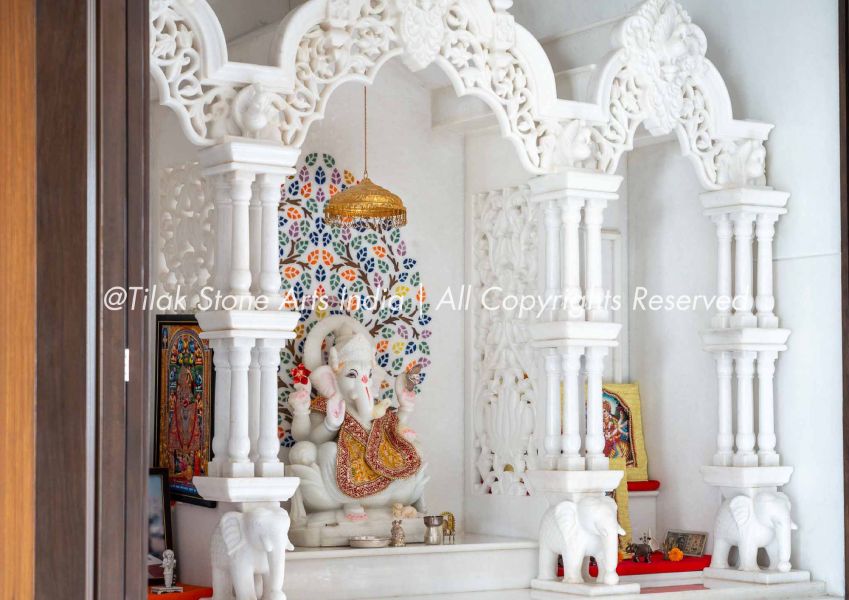
Sacred spaces were once confined to private homes, tucked away in quiet corners where families gathered for prayer. That exclusivity is fading. Commercial establishments are recognising the value of incorporating spiritual elements into their design schemes, creating environments that feel more grounded and welcoming. The presence of a thoughtfully designed temple can transform an otherwise sterile lobby into something memorable.
The Appeal of Marble in Public Worship Spaces
- Cultural Resonance Meets Commercial Strategy: Architects are increasingly specifying marble pooja room designs for hospitality projects because they address multiple needs simultaneously. These installations serve guests seeking familiar spiritual touchpoints during travel times, particularly in hotels catering to Indian diaspora communities. The material itself communicates permanence and respect, qualities that align with how brands want to be perceived. A marble temple isn’t just decoration; it becomes a statement about values and attention to detail.
- Regional Demand and Urban Trends: Projects requiring a marble temple in Delhi often stem from corporate headquarters or luxury hotels wanting to honour local traditions. Delhi’s cosmopolitan character makes it a testing ground for design concepts that blend heritage with contemporary aesthetics. Developers here understand that spiritual spaces can differentiate their properties in crowded markets. The same principle applies in Mumbai, Bangalore, and other metros where discerning clients expect more than basic amenities.
Design Flexibility Across Commercial Settings
- Compact Installations for Limited Footprints: Wall-mounted temples work well in boutique hotels or office reception areas where floor space is precious. These designs can be surprisingly intricate despite their size, featuring delicate jaalis and miniature shikharas that reference traditional temple architecture. The verticality draws eyes upward, creating visual interest without occupying valuable square footage. Lighting plays a crucial role here, with concealed LEDs enhancing carvings and creating an ethereal glow during evening hours.
- Statement Pieces for Grand Lobbies: Five-star properties and wellness resorts often commission larger freestanding temples that serve as architectural focal points. These structures might incorporate:
- Ornate pillars with hand-carved lotus motifs and deity figures
- Multi-tiered domes referencing South Indian or North Indian temple styles
- Integrated storage for ritual items and offerings
- Ambient lighting systems that adjust throughout the day
The scale allows for greater artistic expression and the inclusion of multiple deity niches, accommodating diverse spiritual practices among guests.
Material Selection and Craftsmanship Standards
- Why Vietnam White Marble Dominates Commercial Projects: The preference for Vietnam White Marble in these installations isn’t arbitrary. Its fine grain accepts detailed carving better than coarser alternatives, which matters when intricate iconography defines the design. The material’s luminous quality enhances interiors without overwhelming other elements, maintaining visual balance in spaces filled with competing focal points. Durability is another factor; commercial environments demand materials that withstand frequent interaction and cleaning without degrading.
- Texture and Finishing Techniques: Polished surfaces reflect ambient light and create a sense of spaciousness, whilst matte finishes on carved elements provide textural contrast. Some designers specify a combination, using high-gloss marble for structural components and honed finishes for decorative panels. This layering adds depth and prevents the monotony that can plague single-finish installations.
The Intersection of Faith and Commercial Identity
- Creating Authentic Experiences: Hotels and spas that incorporate marble temples aren’t simply checking boxes on a cultural sensitivity list. They’re acknowledging that travel and work environments can feel isolating, and providing spiritual anchors helps guests feel more at home. A well-executed temple becomes a gesture of hospitality that resonates deeply, particularly with clients who maintain daily prayer practices. The investment signals that the establishment understands and respects their routines.
- Vastu Compliance in Commercial Layouts: Placement follows the same principles that guide residential installations, with northeast positioning preferred where site conditions allow. Architects must balance these traditional guidelines with practical considerations like traffic flow and sightlines. Successful projects find creative solutions that honour both requirements, perhaps reorienting entire lobby layouts or using strategic screening to create appropriate boundaries around the sacred space.
Marble temples in commercial interiors represent more than aesthetic choices. They bridge personal faith and public space, offering moments of pause in environments designed for transaction and movement. As global hospitality and corporate sectors become more culturally nuanced, expect to see these installations gain prominence. If you’re planning a commercial project that could benefit from this element, consider how a thoughtfully designed marble temple might elevate your intended space and create lasting impressions on those who encounter it.