
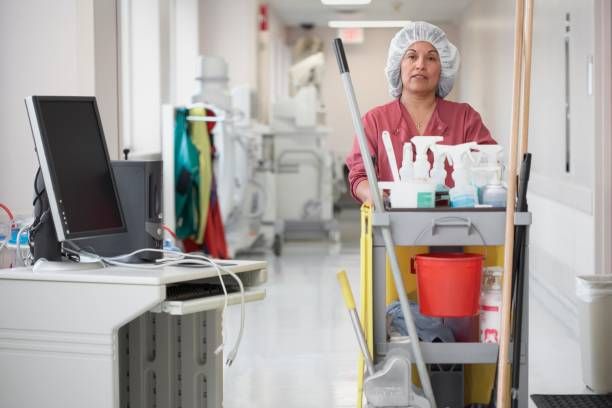
Healthcare facilities face unique cleaning challenges that go far beyond what most people see. Patients with weakened immune systems, open wounds, and post-surgical recovery needs depend on spotless surroundings. A single overlooked surface can become a pathway for dangerous pathogens. The stakes are higher here than in almost any other setting.
The Foundation of Infection Control
Professional Standards That Matter: Hospital cleaning services follow strict protocols designed to eliminate infection risks at every level. These aren’t ordinary cleaning routines. Staff work from ceiling to floor, targeting areas where bacteria and viruses concentrate. High-touch surfaces like door handles, bed rails, and call buttons receive special attention because they’re touched dozens of times daily by different hands.
Specialised Products and Methods: The cleaning products used in hospitals differ completely from standard commercial cleaners. Hospital-grade disinfectants must meet specific kill times for pathogens including MRSA, C. difficile, and norovirus. These products require proper dilution, contact time, and application techniques. Training ensures staff understand which product works for which surface and which pathogen.
Why Outsourcing Makes Sense
Expertise and Compliance: Hospitals benefit from partnering with specialist cleaning providers who understand healthcare-associated infections and prevention strategies. These companies maintain up-to-date knowledge of CQC requirements and NHS guidelines. They invest in ongoing training that hospital administrators might struggle to provide internally. The focus allows medical staff to concentrate on patient care rather than managing cleaning schedules.
Cost Control and Flexibility: Outsourced services often prove more economical than in-house teams. Cleaning companies handle recruitment, training, equipment maintenance, and supply management. Hospitals avoid the overhead costs of managing another department. When patient volumes fluctuate or deep cleaning becomes necessary, external providers can scale resources quickly without long-term commitments.
Building Trust Through Cleanliness
Visible Standards Create Confidence: Patients and families notice cleanliness immediately upon entering a facility. Spotless floors, sanitised bathrooms, and fresh-smelling corridors communicate competence and care. First impressions matter deeply when people are already anxious about medical procedures. A well-maintained environment suggests that the same attention to detail extends to medical treatment.
Regulatory Compliance Protects Reputation: Healthcare facilities face regular inspections and audits. Environmental hygiene standards form a significant part of compliance requirements. Failing to meet these benchmarks can result in penalties, negative publicity, or even service restrictions. Professional cleaning services help facilities maintain documentation, track completion of tasks, and demonstrate adherence to protocols that inspectors expect to see.
Professional cleaning in healthcare settings represents far more than aesthetic maintenance. It forms a critical barrier against infection transmission that protects patients during their most vulnerable moments. Specialist providers bring expertise, compliance knowledge, and resources that enable hospitals to focus on their core mission of delivering excellent patient care. Consider partnering with experienced cleaning professionals who understand the unique demands of healthcare environments and can demonstrate their commitment to patient safety through proven protocols and reliable service delivery.
Featured Image Source: https://media.gettyimages.com/id/73773125/photo/hispanic-cleaning-woman-pushing-cart-in-hospital-corridor.jpg?s=612×612&w=0&k=20&c=M1AjvSOfzX8ccMJlFZ-HuIxxoJy0ZJcPPVdyO7TAdVg=